
The project offers two independent products to every account holder: a wallet for the XAUT stablecoin and a trading service for the Forex/CFD market. This opportunity may seem appealing to traders, especially since the platform claims to be fully regulated. However, there are also solid reasons to believe that the company could be yet another scam operation. We decided to take a closer look and find out whether this broker can really be trusted. Read on to see what we discovered.
Key Features
- Company Name: DTG Ventures FZCO and others
- Website: https://solonix.one/
- Available Contacts: [email protected], [email protected]
- Foundation: 2026
- Services: Forex/CFD trading, XAUT custodial wallet
- License: DASP license № PSAD-0063 by Comision Nacional de Activos Digitales (CNAD), El Salvador
- Initial Deposit: Unspecified
From Sign-Up to Payout
At first glance, the official Solonix.one website does not look bad. The color combinations used throughout the pages are well-chosen, while the animations are used sparingly and are not annoying. However, without any thematic images, the design looks rather bare and gives the impression that something is missing. Moreover, the footer background and text colors were apparently chosen in such a way that it is extremely difficult for users to read the information provided there. That said, the template itself is quite well designed and optimized for fast page loading.
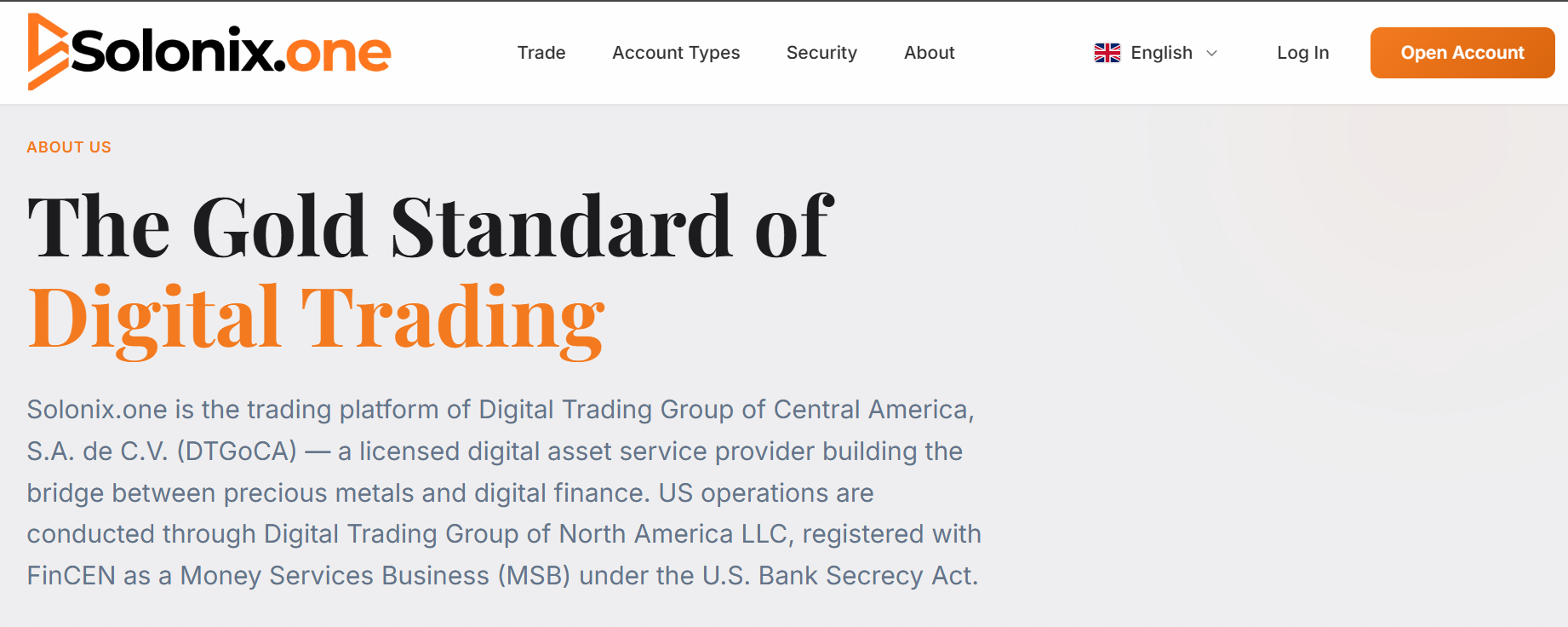
At the same time, the work of the content managers is difficult to rate highly. For example:
- We can find information about several registered companies and licenses held by some of them. However, the relationship between these companies remains unclear, and the broker does not provide any details about how they are connected.
- On the Research & Insights page, articles are published irregularly, and the frequency of publication leaves much to be desired. The latest article was published on August 3. Before that, the broker had been posting no more than one or two articles per month, despite making a big deal about having a dedicated market research department.
- Security has its own dedicated section in the menu, but all the loud claims about security measures amount to little more than words unsupported by specific facts.
In short, we rated the content of the Solonix.one website unsatisfactory. Everything else at the broker is organized only slightly better.
- During registration, users are required to provide a minimum amount of personal information: first and last name, email address, phone number, country of residence, and date of birth. Immediately after the email address is verified, a new client receives an account and access to the personal cabinet.
- Full verification is not required for complete access to the platform, except for withdrawals. It is sufficient to complete the profile by providing an address and answering a short questionnaire about income and the source of funds. Personal details only need to be verified after submitting the first withdrawal request.
- A lot is said about security, but the actual practices do not appear to match these claims. For example, the login and password for accessing the trading terminal are sent by email, while there is no mention of 2FA in the personal cabinet.
- On the other hand, an internal wallet within the system must be approved before trading can begin. Yes, you read that correctly: to get it approved, you have to fund it first. Without doing so, you will not even be given access to a demo account. Furthermore, to use the advanced Solonix.one Financial Research Terminal, the required deposit must be at least $10,000.
- Incidentally, deposits are accepted only in cryptocurrencies (including stablecoins) and via bank transfers in US dollars and euros. For USD transactions, the payment details list SYSTEM PAY SERVICES MALTA LTD as the recipient. For EUR transactions, there is an option to send funds either to its account or to an account belonging to Digital Trading Group of Central America S.A. DE C.V., held with UAB Pervesk in Lithuania. How the funds ultimately reach traders’ accounts at the company in El Salvador, and how they are converted into USDC — the stablecoin in which trading accounts are denominated — remains unclear.
Thus, neither the official Solonix.one website nor its client area can hardly be considered to meet the standards of a modern regulated broker. Traders’ interests and needs are largely ignored, the level of security for both trading and non-trading operations leaves much to be desired, and most of the features promised to traders have not been implemented at all. In particular, the client area does not even contain any mention of transactions involving XAUT, despite the fact that this topic takes up almost half of the website.
Our Trading Experience With Solonix.one
As we have already mentioned, traders are required to fund their wallet before they can open either a live or demo trading account with the broker. We consider the platform to be a scam, so we decided not to send any funds. Unfortunately, as a result, we did not get to see the company’s trading terminal, but we do not believe we missed much.
Traders are offered a modern, browser-based trading terminal with all the features supposedly required for effective trading. However, as practice shows, similar products developed by lesser-known companies tend to fall far behind industry leaders such as MetaTrader, cTrader, or TradingView. Even when such a platform is based on a free TradingView widget, its functionality and usability are nowhere near those of professional trading software.
Solonix.one also does not provide detailed information about its trading conditions. In fact, the only source of information about trading parameters is the account types page; there are no contract specifications available on the website.
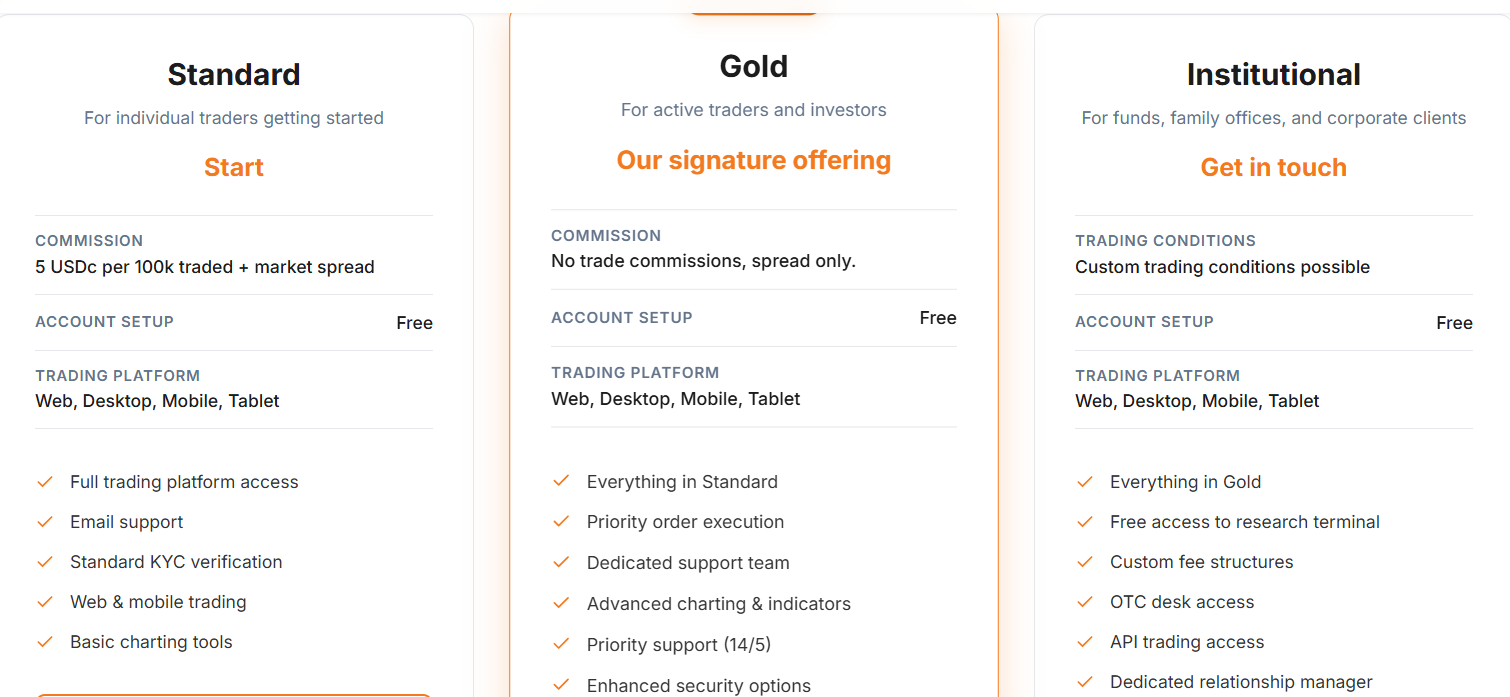
As we can see, the broker offers clients just three account types:
- Standard, which the project presents as the best choice for beginner traders. However, the description contains little more than options such as “Full trading platform access” and “Standard KYC verification.” The only parameter directly related to trading is the commission, which amounts to 5 USDC per 100,000 units of the base asset.
- Gold. According to the broker, this account is designed for active traders and investors. The list of features is expanded, including a promise of discounts for access to the research terminal. There are no trading commissions; all of the trader’s costs supposedly depend exclusively on the size of the spreads.
- Institutional. This account is available to large clients, including funds, family offices, and legal entities. The terms of service are negotiated directly with company representatives.
Worth noting! If a trader does not have enough funds to meet the deposit requirement for the Standard account, they can request a Lite account, which has a lower starting amount but a higher trading commission of up to 7 USDC per 100,000 units of the base asset.
As we can see, Solonix.one operates much like any typical scam broker. The website does not disclose a single meaningful account or trading parameter (apart from the Standard account’s trading commission). The minimum deposit amount is unknown; maximum leverage, spreads, and swaps are not disclosed; and there is no information about trade limits or Margin Call/Stop Out levels.
This is exactly how scammers operate when they attract clients through cold calls to phone numbers that have usually been obtained illegally. Representatives of the platform tell unsuspecting potential clients about supposedly excellent trading conditions. To avoid exposing this false information, however, they do not publish those conditions on the official website. We consider this approach to disclosing essential trading information to be a major red flag.
The Reality Check
Today, cryptocurrency market regulation has still not become universal worldwide, although many countries are actively working to bring crypto operations under control and establish a legal framework for the industry. Many scam projects claiming to be involved in digital asset operations avoid obtaining the relevant regulatory licenses, hoping that until common standards and regulations are adopted, operating outside the legal framework will not attract much attention.
There is another approach: such platforms rely on permits and licenses issued by offshore organizations, where there are usually few strict requirements or restrictions beyond paying the required fees on time.
We investigated how legal and legitimate the activities of Solonix.one actually are. So, what did we find?
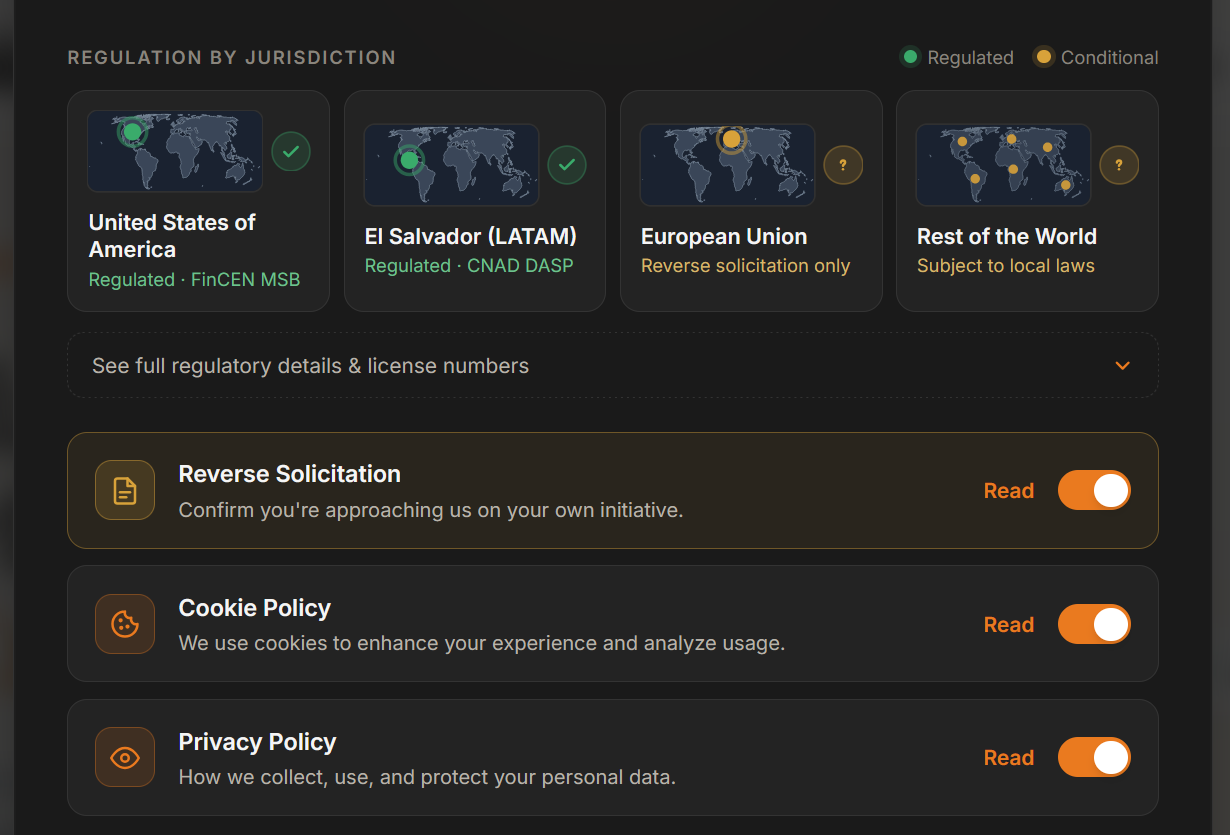
When users first visit the website, they are shown a splash screen designed to convince them that the broker is regulated in several countries. It also explains the supposed legal grounds on which the company provides services to clients from different jurisdictions.
In addition, the website footer contains information about the companies operating the platform, while some additional details about them are provided on a dedicated Regulation & Licensing page. However, we decided not to start our investigation with regulation, but rather with whether the broker has an official corporate registration. According to the information provided by the company, Solonix.one is a registered trademark of DTG Ventures FZCO, registered under No. 62591 in Dubai, UAE, with a record in the UAE Ministry of Economy registry under No. 460696.
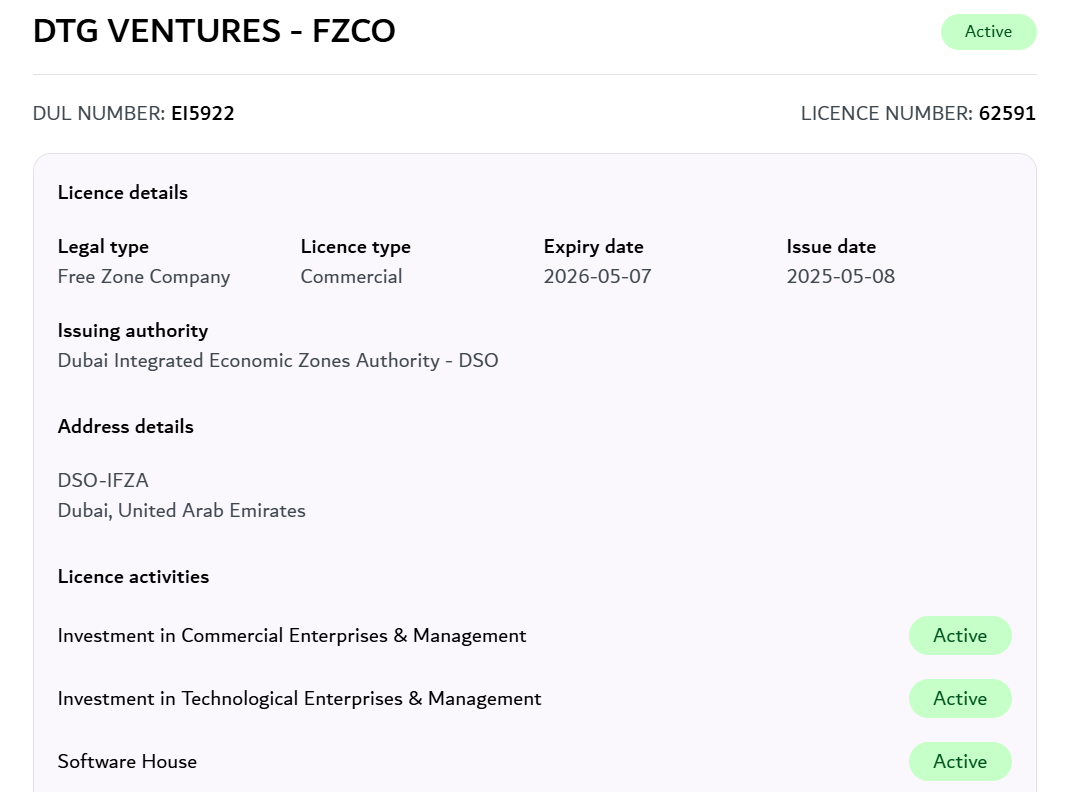
This information was confirmed: DTG Ventures FZCO is indeed registered in a Dubai Free Zone, and its license number matches the one stated on the website. The license authorizes the company to invest in commercial and technology companies, as well as to develop and implement software. However, there are several problems:
- A Dubai Free Zone license has nothing to do with the regulation of any business activity, including financial services. It merely confirms that a legal entity is registered in one of the Free Zones and is authorized to conduct business within its territory.
- Without special authorization from the SCA (Securities and Commodities Authority), or from the DFSA for companies registered in the Dubai International Financial Centre (DIFC), a company holding a Dubai Free Zone license is not authorized to conduct brokerage activities.
- Judging by the text of the online copy of the document, its validity expired in May 2026.
- The claim that DTG Ventures FZCO operates Solonix.one is unsupported and has not been documented. Scammers could easily have found information about the company in the public Dubai Business Directory and used it without authorization.
We have reason to believe this because there is no information in the WHOIS records about the company that owns the domain, while the broker claims that Solonix.one is directly operated by Digital Trading Group of Central America S.A. de C.V. (DTGoCA), a company registered in El Salvador. We visited the company’s official website and found publications containing information about its operation of the platform, obtaining licenses in El Salvador, and registering its North American division as an MSB with FinCEN. However, we found no mention of the Dubai company.
The project representatives claim that DTGoCA is authorized by the Central Reserve Bank of El Salvador as a Bitcoin Services Provider and holds Comisión Nacional de Activos Digitales (CNAD) license No. PSAD-0063 as a Digital Asset Services Provider (DASP).
Unfortunately, we were unable to find information from the Central Reserve Bank in the public domain. However, this is not particularly important: authorization as a Bitcoin Services Provider, without the relevant CNAD license, does not grant the right to conduct cryptocurrency operations. We did find information about the broker in the public CNAD registry.
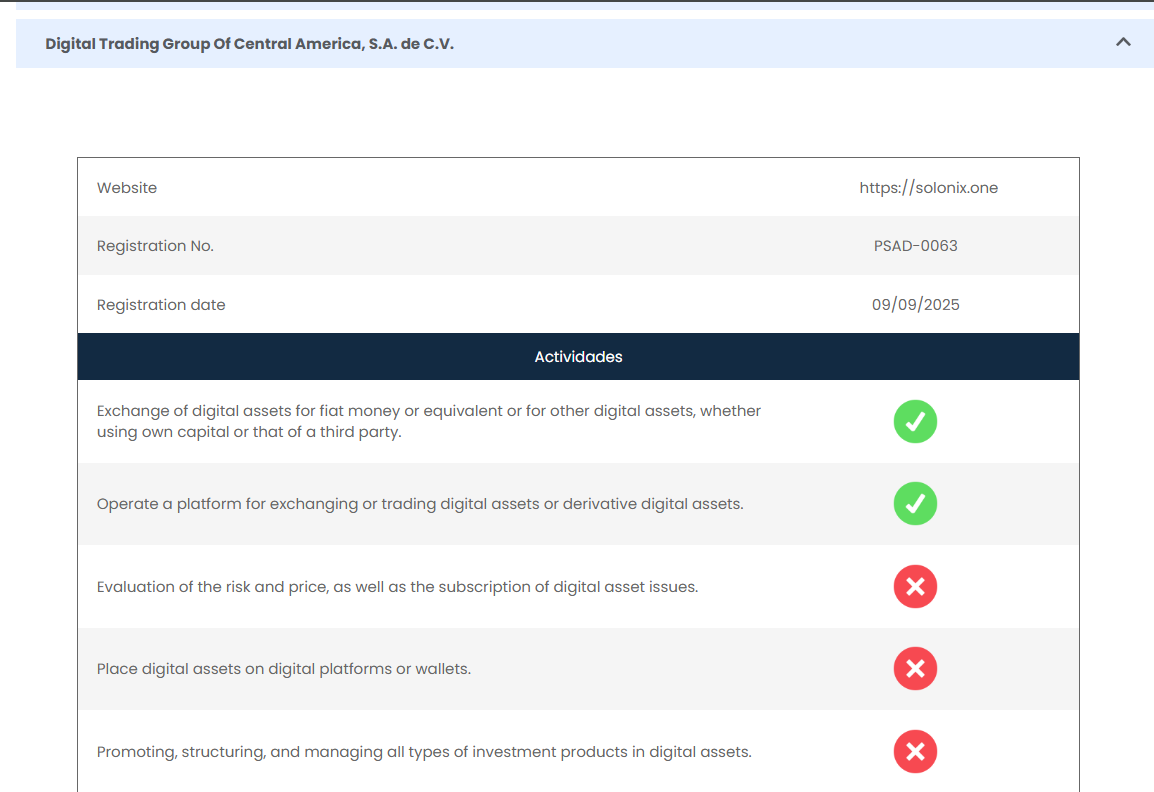
The company does indeed hold a license with the stated number, issued on September 9, 2025. The license authorizes the exchange of fiat and cryptocurrencies for digital assets and the operation of platforms for trading and/or exchanging cryptocurrencies. It also states that the company conducts its activities through solonix.one.
Thus, we can confirm the information regarding the company’s registration and license in El Salvador. This makes the broker’s cryptocurrency-related activities legal and, to some extent, legitimate.
Why, then, are we not saying that the broker operates fully within the law? Yes, holding a CNAD license means that the platform is subject to applicable financial regulations. This reduces the risks associated with dealing with crypto exchanges and brokers. The Salvadoran regulator also requires compliance with AML/KYC standards, cybersecurity rules, and regular financial reporting. This is another positive factor for companies operating on the international market.
However, the CNAD document is limited in scope and authorizes the company to serve clients in El Salvador. The country is relatively small, both in terms of population and cryptocurrency market volume. Yes, companies holding this license enjoy certain advantages over unlicensed digital asset service providers in the region.
However, in most Latin American countries, legalizing such activities still requires the company to be registered locally and obtain the appropriate authorization from the relevant local authorities. The situation is even more complicated when it comes to European clients, as the EU has introduced its own regulatory framework for crypto-asset services.
This is presumably why Solonix.one refers to the use of the Reverse Solicitation mechanism for clients from other jurisdictions. The broker can legally serve such clients only if they approached the broker on their own initiative and opened an account independently, without targeted marketing aimed at the relevant audience.
There is another interesting fact: at the end of 2025, the CNAD license listed the website of another broker, finprime.pro. Interestingly, even today, that website lists the same company names as those mentioned on solonix.one.
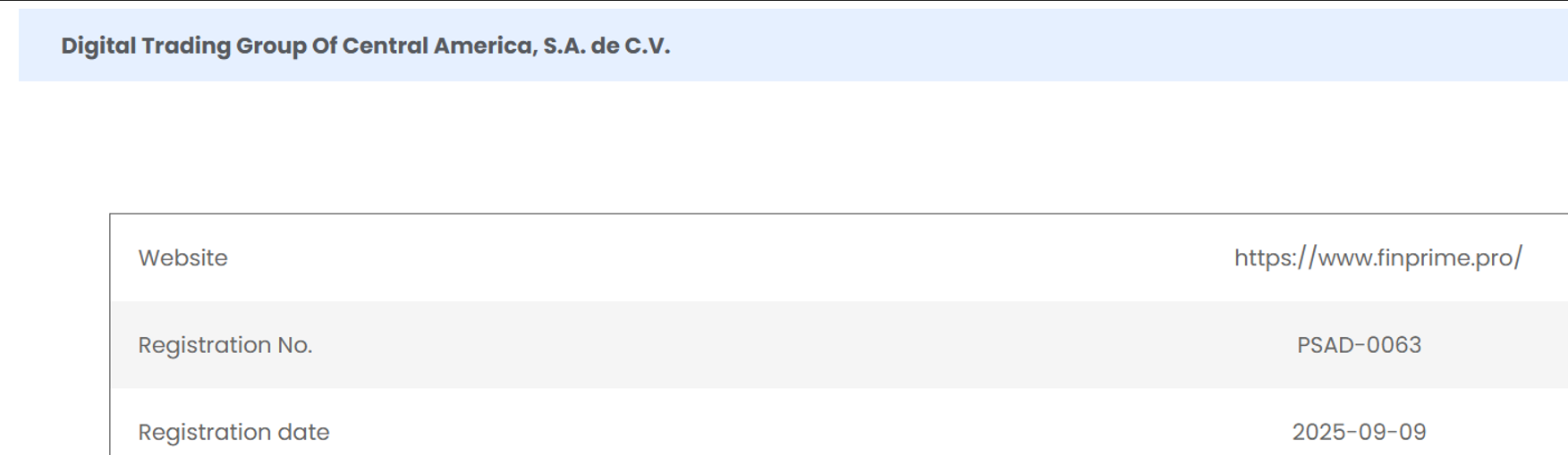
Why, then, did all references to it disappear from the regulator’s document? Why is it not mentioned anywhere on the official DTGoCA website? It is worth noting that the web services of the two platforms look almost identical, like twin brothers, apart from a few minor details. Does this mean that the company actually operates two brokers, one of which can already officially be considered a scam? If so, what guarantee is there that the second one will not end up in the same category soon?
And there are a couple more points worth mentioning:
- Solonix.one claims that the company’s North American subsidiary, Digital Trading Group of North America LLC, is registered as an MSB with FinCEN, presenting this on its splash screen as evidence of regulation in the United States. However, in the website footer, the company says that this US entity processes money transfers on behalf of the broker and handles payments to traders. Let us make one thing clear: we confirmed that the company is indeed registered with FinCEN as a Money Services Business (MSB). However, such registration has nothing to do with financial regulation in the traditional sense. FinCEN primarily monitors compliance with certain requirements, particularly AML rules, by businesses operating in the United States or serving US customers. We do not understand what this has to do with a Salvadoran/Dubai-based broker. This is especially questionable because, in the client area, we found bank transfer details that do not even mention this North American company. Is this yet another attempt to make an offshore platform appear more credible?
- A DASP license does not authorize the provision of Forex/CFD services, which constitute the broker’s main business activity. Therefore, even in El Salvador, providing such services appears to be unauthorized. The footer does state that some of these services are provided by other legal entities, such as DTN Sociedad de Responsabilidad Limitada, registered in Costa Rica, or DTGpro LTD, registered in Saint Lucia. However, neither of these companies holds a brokerage or dealer license. Accordingly, it is difficult to speak of lawful and properly regulated services for traders.
Thus, the claims that Solonix.one is fully regulated have turned out to be a myth. The only relevant license, issued by CNAD in El Salvador, authorizes the provision of cryptocurrency exchange and trading services within that country.
In other jurisdictions, neither these nor the broker’s other services — including access to the Forex/CFD market — are licensed. Traders use them at their own risk, without the protection of their rights that comes with dealing with a properly regulated financial provider. Don’t you think there are starting to be too many red flags?
How Long Has Solonix.one Been in the Game?
We were unable to find any information from the broker itself about its age or how long it has been operating online. We do have, for example, the date when the CNAD license was issued or when the Dubai company supposedly owning the domain was registered. However, these dates tell us little about when the platform actually went online.
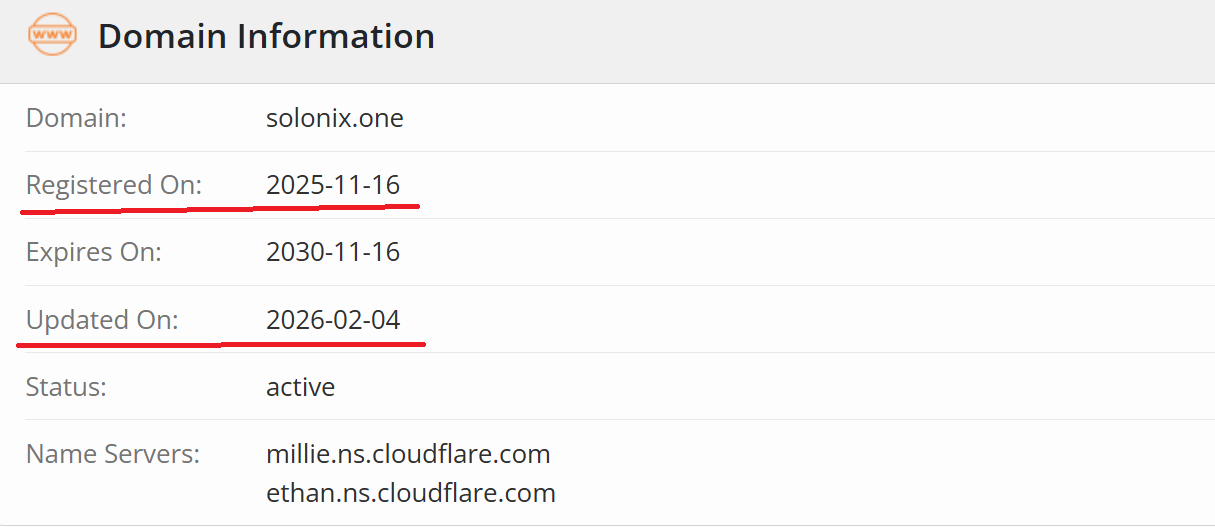
A more accurate picture can be obtained, for example, from the WHOIS information regarding the domain registration.
We can see that the solonix.one domain used by the broker was registered on November 16, 2025, one month after the company obtained its CNAD license. The date of the last significant update suggests that the platform started operating somewhat later, in February 2026. At the same time, activity surrounding the website appears to be limited, as the only snapshot available in the Internet Archive dates back to June 2026. The first solonix.one review on Trustpilot appeared even later, on July 21, 2026.
Thus, we can conclude that the platform has been fully operational online for less than six months. That is not nearly enough time to establish a strong reputation or gain widespread recognition within the trading community.
Extra Fraud Indicators
Nevertheless, the project’s owners are clearly willing to build a reputation. As we mentioned above, reviews on Trustpilot started appearing at the end of July 2026. Just over a month has passed, and there are already five reviews, all of them positive. It is obvious that the administration is not reluctant to spend money on purchasing favorable posts. This is also supported by the social media publications (there are not many of them), where the broker is openly praised.
Want to understand what is wrong with these comments? Just read them. You will not find a single specific fact in any of them. This is a clear sign that the posts were commissioned from unprofessional copywriters.
Is Solonix.one the Right Fit?
In our Solonix.one review, we tried to assess this broker objectively. The facts we collected make it very difficult to describe the platform as regulated or operating honestly. For example, the broker has failed to disclose its trading conditions, while there is hardly any point in even talking about transparency when it comes to financial transactions. At the same time, the company holds only one license that permits cryptocurrency-related activities, while its Forex/CFD services are not regulated at all. Meanwhile, the administration appears to be artificially building the project’s reputation by purchasing positive reviews and publications.

Do not believe the stories told by Solonix.one managers. They do everything they can to persuade newcomers to deposit as much money as possible. Once you make your first deposit, they will not leave you alone. There will be plenty of stories: the larger your deposit, the more profitable your trading will supposedly be; you need to pay for insurance, taxes, commissions, and so on. I constantly deal with situations like this and have repeatedly submitted complaints to support, but I have never received a response. Meanwhile, money continues to be deducted from my account regularly. I decided to leave this broker, and I would not recommend even starting to work with them.